
Instagram Marketing: Strategy, Fundamentals, Campaign Insights, and Performance Analysis

Instagram Marketing has changed significantly over the last few years. Earlier, visibility depended mostly on posting frequency and follower count. Today, the platform works as a signal-driven distribution system, where content is shown based on how people interact with it.
Instagram now prioritizes short-form video, engagement quality, and relevance over simple reach. Reels play a central role in discovery, while Stories help maintain ongoing audience connection. At the same time, AI-driven ranking systems analyze user behavior more deeply, making strategy and content planning more important than ever.
This blog explains Instagram marketing fundamentals, strategy, campaign structure, and performance analysis in a practical and easy-to-understand way – without shortcuts or misleading tactics.
Instagram Marketing Fundamentals and Strategy
Strong Instagram marketing starts with understanding the basics. Fundamentals are no longer about aesthetics alone; they focus on how content earns attention and retains interest.
A structured Instagram marketing strategy aligns content with audience behaviour. Instead of posting randomly, brands now plan content around themes, formats, and consistency. This approach helps Instagram understand who the content is for and where it should be distributed.
Engagement quality has become a key factor. Saves, shares, profile visits, and watch time matter more than likes. These Instagram engagement signals tell the platform that content is useful, not just scrollable. Strategy today is about creating value first and visibility second.
How Instagram Campaigns Work in Today’s Ecosystem

An Instagram campaign is no longer built around a single post or video. It works as a series of connected content pieces designed to build interest and engagement over time.
Modern campaigns usually balance organic reach with minimal paid support, but organic performance remains the foundation. Content is released in stages—starting with awareness-driven posts, followed by engagement-focused content, and supported by Stories and Reels to maintain continuity.
Instagram ranking factors such as relevance, retention, and depth of interaction influence how widely a campaign is distributed. Campaigns that encourage repeat actions—such as saves, comments, and profile visits—tend to perform better than one-time promotional posts. This approach favours structured planning and consistency rather than short-term visibility boosts.
Content Formats Driving Visibility on Instagram
Instagram Reels and Short-Form Discovery
Instagram Reels are the main driver of reach and discovery on the platform. They allow content to reach users beyond existing followers, making them essential for growth.
Instagram Reels performance is no longer measured only by views. Completion rate, replays, and average watch time now indicate whether content holds attention. Reels that deliver value quickly and maintain interest tend to perform better across Explore and suggested feeds.
Stories and Ongoing Audience Interaction
Stories play a different but equally important role. Instagram Stories engagement helps maintain visibility among existing followers and strengthens brand recall.
Replies, poll responses, and sticker interactions act as soft engagement signals. While Stories may not generate massive reach, they support feed and Reels performance indirectly by maintaining active audience relationships.
Instagram Marketing Analysis and Performance Signals
Instagram marketing analysis today focuses on behavioural data, not surface metrics. Reach and impressions provide context, but meaningful engagement shows true performance.
Saves, shares, profile visits, and time spent on content reflect how valuable users find a post. These Instagram engagement signals help marketers understand what content resonates and what needs improvement.
Follower count has become less important than interaction quality. Accounts with smaller but engaged audiences often outperform larger accounts with passive followers. Analysis now guides strategy refinement rather than just reporting results.
Algorithm Behavior and Ranking Dynamics
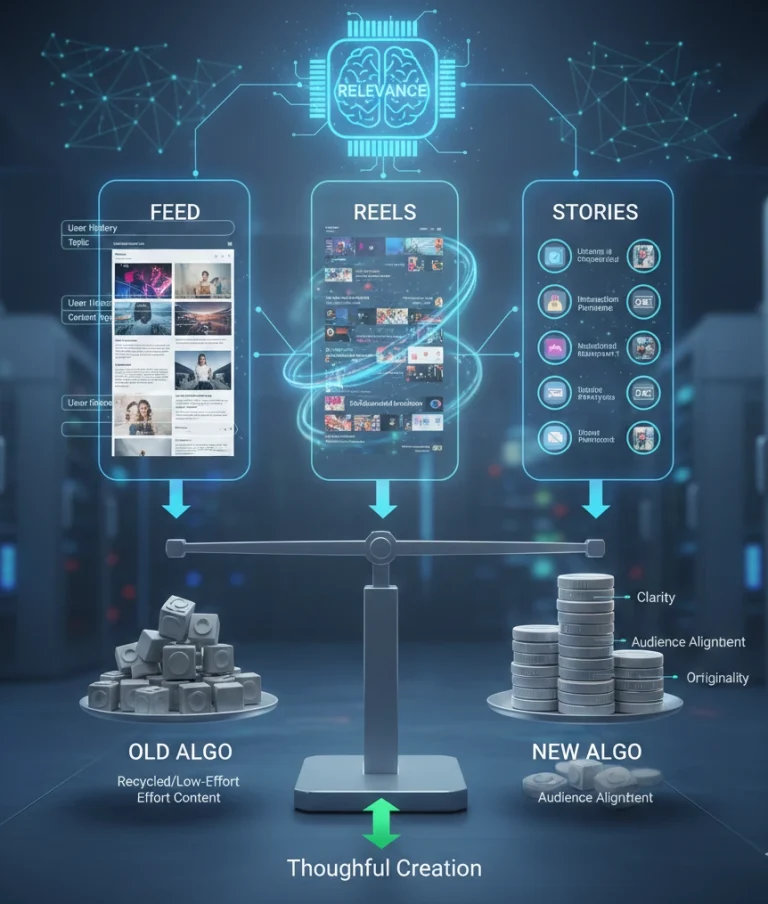
Instagram’s algorithm evaluates content differently across Feed, Reels, and Stories. Each format has its own ranking logic, but relevance remains the common factor.
User history, content topic, and interaction patterns influence what appears on a person’s screen. Early engagement still matters, but sustained interaction over time carries more weight. Instagram ranking factors increasingly reward originality, clarity, and audience alignment.
This change reduces the effectiveness of recycled or low-effort content and encourages thoughtful creation.
Instagram Marketing in 2026 and Beyond
Instagram marketing in 2026 will continue moving toward AI-assisted discovery and personalization. Content distribution will rely more on predicted user interest rather than follower relationships.
Original content, creator credibility, and consistent themes will gain importance. Growth tactics focused only on trends or shortcuts are likely to lose effectiveness. Instead, content systems that prioritize value and relevance will perform better long-term.
Brands that invest in understanding the platform rather than chasing algorithms will stay visible as Instagram evolves.
Conclusion
Instagram Marketing today requires a balanced approach that combines strategy, fundamentals, campaigns, and performance analysis. Success comes from understanding engagement signals, content behaviour, and platform dynamics – not from quick fixes or shortcuts.
As Instagram continues to evolve, informed decision-making and consistent value-driven content will remain the foundation of sustainable growth. For brands ready to apply these insights with clarity and structure, working with a trusted Instagram growth consultant can help turn strategy into measurable results.